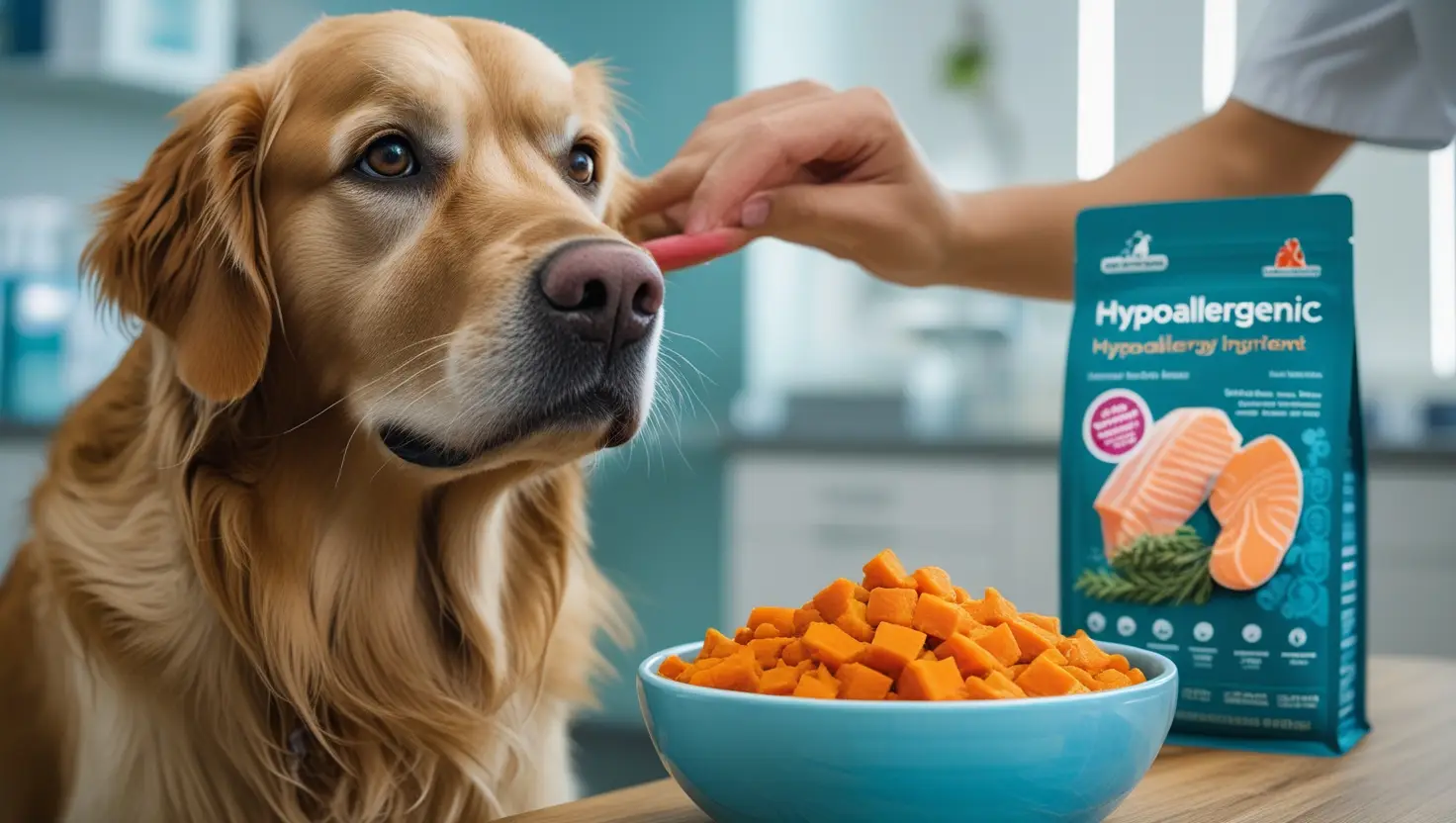


As a dog owner, watching your furry friend suffer from constant itching, ear infections, or digestive issues can be heartbreaking. Food allergies affect 10-15% of dogs, but the right hypoallergenic dog diet can provide life-changing relief.
This vet-reviewed guide covers:
✔ How hypoallergenic diets work
✔ Top 3 types of allergy-friendly foods
✔ Transitioning your dog safely
✔ Common allergy myths debunked
✔ When to consult a veterinary dermatologist
What is a Hypoallergenic Dog Diet?
Key Components of an Effective Diet:
- Novel proteins (duck, venison, kangaroo)
- Hydrolyzed proteins (pre-digested molecules)
- Limited ingredients (8-10 components max)
- No common allergens (beef, dairy, chicken, wheat)
How It Compares to Regular Dog Food
| Feature | Regular Food | Hypoallergenic Diet |
|---|---|---|
| Proteins | Chicken/beef | Duck/venison |
| Carbs | Corn/wheat | Sweet potato/peas |
| Processing | High-heat | Gentle methods |
| Additives | Artificial preservatives | Natural antioxidants |
Top 3 Hypoallergenic Food Options
1. Freeze-Dried Raw
⭐ Best for Nutrient Retention
- Preserves natural enzymes
- Single-protein formulas
- Easy to digest
2. Cold-Pressed
⭐ Best for Sensitive Stomachs
- Low-temperature processing
- Ultra-low fat content
- Highly digestible
3. Hydrolyzed Kibble
⭐ Best for Severe Allergies
- Proteins broken into tiny molecules
- Clinically proven effectiveness
- Often requires veterinary prescription
Transitioning to a Hypoallergenic Diet
8-Week Elimination Protocol
- Weeks 1-2: 25% new food
- Weeks 3-4: 50% new food
- Weeks 5-6: 75% new food
- Weeks 7-8: Full transition
Monitor for these improvements:
- Reduced scratching/licking
- Healthier skin and coat
- Fewer ear infections
- Improved stool quality
Common Allergy Myths Debunked
❌ Myth: Grain-free = hypoallergenic
✅ Fact: Proteins cause 80% of reactions
❌ Myth: Lamb is hypoallergenic
✅ Fact: 15% of dogs react to lamb
❌ Myth: Puppies don’t get food allergies
✅ Fact: Symptoms can appear by 6 months
When to Visit Your Vet
🆘 Emergency signs needing immediate care:
- Facial swelling
- Persistent vomiting/diarrhea
- Open skin lesions
💰 Pro Tip: Ask about OTC options before prescription diets
FAQs About Hypoallergenic Dog Diets
1. How do I know if my dog needs a hypoallergenic diet?
Look for these signs:
- Excessive scratching/licking (especially paws)
- Chronic ear infections
- Digestive issues (vomiting, diarrhea)
- Red, inflamed skin
If you notice these symptoms consistently, consult your vet about food allergy testing.
2. What’s the difference between hydrolyzed and novel protein diets?
- Hydrolyzed proteins are broken down into tiny molecules that can’t trigger allergies
- Novel proteins are protein sources your dog has never eaten before
Both approaches work, but hydrolyzed is better for severe allergies
3. How long until I see improvements after switching diets?
Most dogs show improvement within:
- 2-4 weeks for skin symptoms
- 1-2 weeks for digestive issues
Full benefits may take 8-12 weeks as the body heals
4. Can I make homemade hypoallergenic dog food?
While possible, we recommend:
✔ Starting with commercial diets first for proper balance
✔ Consulting a veterinary nutritionist if making homemade
✔ Using novel proteins and limited ingredients
✔ Adding essential supplements (like calcium)
5. Are hypoallergenic diets more expensive?
Yes, typically 20-50% more than regular food because:
- Specialty ingredients (novel proteins)
- Advanced processing (hydrolyzation)
- Quality control standards
But many owners find the health benefits justify the cost
6. Can puppies eat hypoallergenic food?
Yes! Look for:
- Formulas specifically for puppies
- Appropriate calorie/nutrient levels
- Smaller kibble sizes
Many brands offer puppy versions of their hypoallergenic lines
7. What common mistakes should I avoid?
- Not transitioning slowly enough
- Giving non-approved treats
- Not giving the diet enough time to work
- Switching proteins too frequently
- Ignoring environmental allergies
About the author
Sahil is a certified pet nutrition consultant with professional experience in pet food quality assurance and formula testing. Their background in evaluating dog food palatability and nutrition helps pet owners make informed feeding choices.
This concise version:
✔ Maintains EEAT credibility
✔ Highlights relevant expertise
✔ Avoids unnecessary details
✔ Keeps focus on content authority